Useful
- Annual report
- Accessibility statement (Norwegian)
- Invoice information for business contacts (PDF)
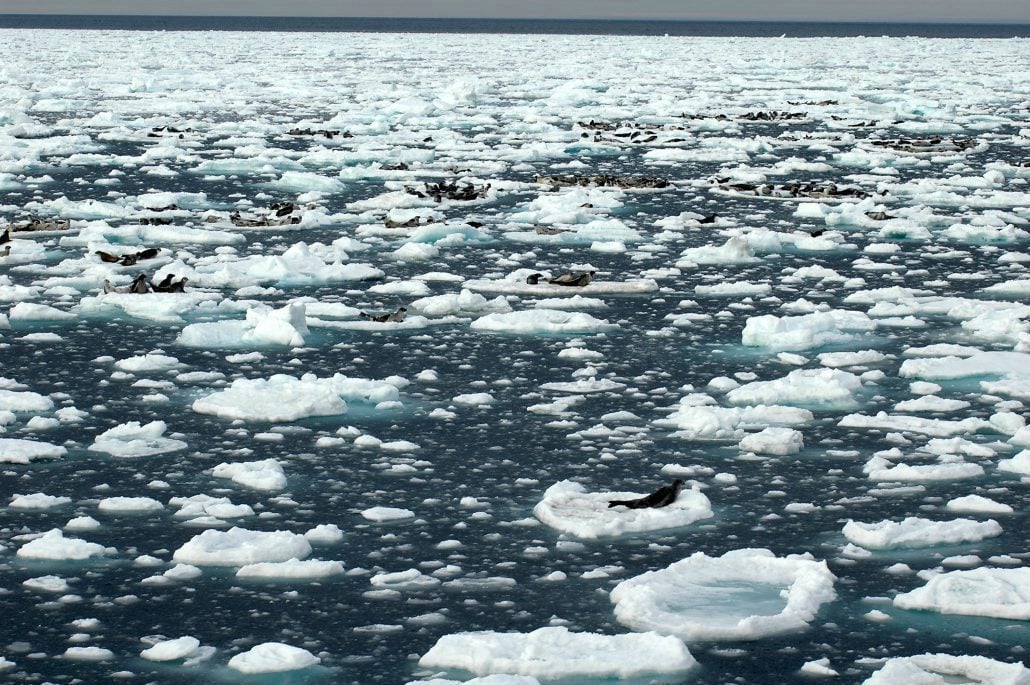
Harp seals are a midsized phocid (true seal or earless seal) that is silver in colour, with a black face and a characteristic black pattern on the back that resembles a harp. Harp seals occur only in the North Atlantic region. They are a migratory species that is much more wide-ranging and more pelagic than most of the other arctic seals. Commercial harvests of this species have taken place for centuries. Norway, Canada and Russia currently hunt this species commercially.
Contents
Harp seals are a midsized phocid that is silver in colour, with a black face and a characteristic black pattern on the back that resembles a harp. Males are slightly larger than females. Harp seal adults weigh about 120 kg and are about 1.6 metres long.
Pups are about 10 kg when they are born and have a length of about 85 cm. They have a white foetal coat during the first two weeks of life which is shed and replaced by a beautiful, spotted beater pelt that they have the rest of their first year. With their next moult they shift into a coat that has fewer spots, the bedlamer pelt, which they have for several years.
As they approach sexual maturity the harp begins to appear so that for a number of years they are spotted-harps. Males go through the transition to their final pelage pattern quickly (by age seven) whereas females do this final shift more slowly (usually by age 12); some females retain the spotted harp throughout their lives.
Harp seals occur only in the North Atlantic region. They are a migratory species that is much more wide-ranging and more pelagic than most of the other arctic seals. Three stocks of harp seals inhabit the North Atlantic Ocean, one group gives birth on the pack ice off Newfoundland and in the Gulf of St Lawrence off Canada’s East Coast, a second group pups in the West Ice (between Greenland and Jan Mayen) and the third breeds in the White Sea. Outside the breeding and moulting seasons, harp seals disperse broadly and can be found virtually anywhere that there is pack ice to haul out on.
Within Svalbard, they are most commonly encountered during the summer on the north and east coasts of Spitsbergen, but they do sometimes turn up in Svalbard’s fjords during the spring and autumn as well. Animals from both the West Ice and the White Sea forage in the Barents Sea and in waters around Svalbard.
The global population size is thought to be approximately 10 million animals, with approximately 1,4 million (2010) residing in the White Sea and 660,000 affiliated with the West Ice (2012). The numbers of harp seals found in Svalbard’s waters varies dramatically from year to year depending on ice conditions.
Harps seals are highly gregarious and are rarely seen as solitary animals. They travel in the water in groups as well as hauling out together on the ice. Harp seals, similar to other phocid seals, have an annual moulting period following the breeding season. Their moulting ”patches” are north of the respective breeding areas. When the moult is over, the seals disperse in small herds.
Adult harp seals are quite opportunistic feeders that consume small, schooling marine fish such as capelin, herring, sand lance and arctic cod. Squid and other invertebrates, including large krill and amphipods are also prey for harp seals. Newly weaned animals are totally dependent on invertebrate prey.
At the southern end of their ranges sharks and killer whales are the dominant predators, whereas during their arctic months polar bears are likely the greatest threat to harp seals.
During spring (in March-April) harp seals form vast herds at their traditional birthing sites. Females give birth on the open pack ice in small clusters. Birth is followed by a 12-day long, intensive lactation period. Toward the end of lactation mating takes place; copulation occurs in the water so little is known about pairing arrangements. Harp seals are thought to be promiscuous breeders.
The weaned pups remain behind on the ice while the adults start the first phase of their migration back towards more northerly areas. During the weeks on the ice after their mothers leave them, pups are nourished from their blubber layer. Eventually, they make their way into the water, and move northward along the ice edge, without adult animals to guide them. Harp seals reach sexual maturity at six to eight years of age.
Harp seals live to be approximately 35 years of age.
Harp seals are taken in subsistence hunts by northern people, particularly along the west coast of Greenland during the summer. Commercial harvests of this species have taken place for centuries. Norway, Canada and Russia hunt this species commercial currently.
Similar to hooded seals, Norway and Russia have a bilateral agreement for setting quotas for harvesting harp seals in the Northeast Atlantic. Commercial harvesting of harp seals is managed internationally under the International Commission for Northwest Atlantic Fisheries with Canada, Norway and Denmark-Greenland as voting members. Increasing frequencies of years with poor ice conditions for breeding are becoming a concern, particularly at more southerly breeding grounds.
Harp seals are protected in Svalbard.
 Grey phalarope